Let me guess why you're here.
You need a text-to-speech tool. You found out about ERIC voice. It sounds pretty good. But you're skeptical because in 2024, nothing is actually "free" anymore—there's always a catch, a subscription, a trial period, or some hidden fee that shows up right when you've invested time learning the platform.
I get it. I'm cynical about this stuff too.
So let's cut through the marketing BS and talk straight about whether ERIC text-to-speech is actually free, what "free" really means in the TTS world, and where you can get legitimate access without getting your credit card information harvested by yet another SaaS company.
The Short Answer (For People Who Don't Have Time for 2500 Words)
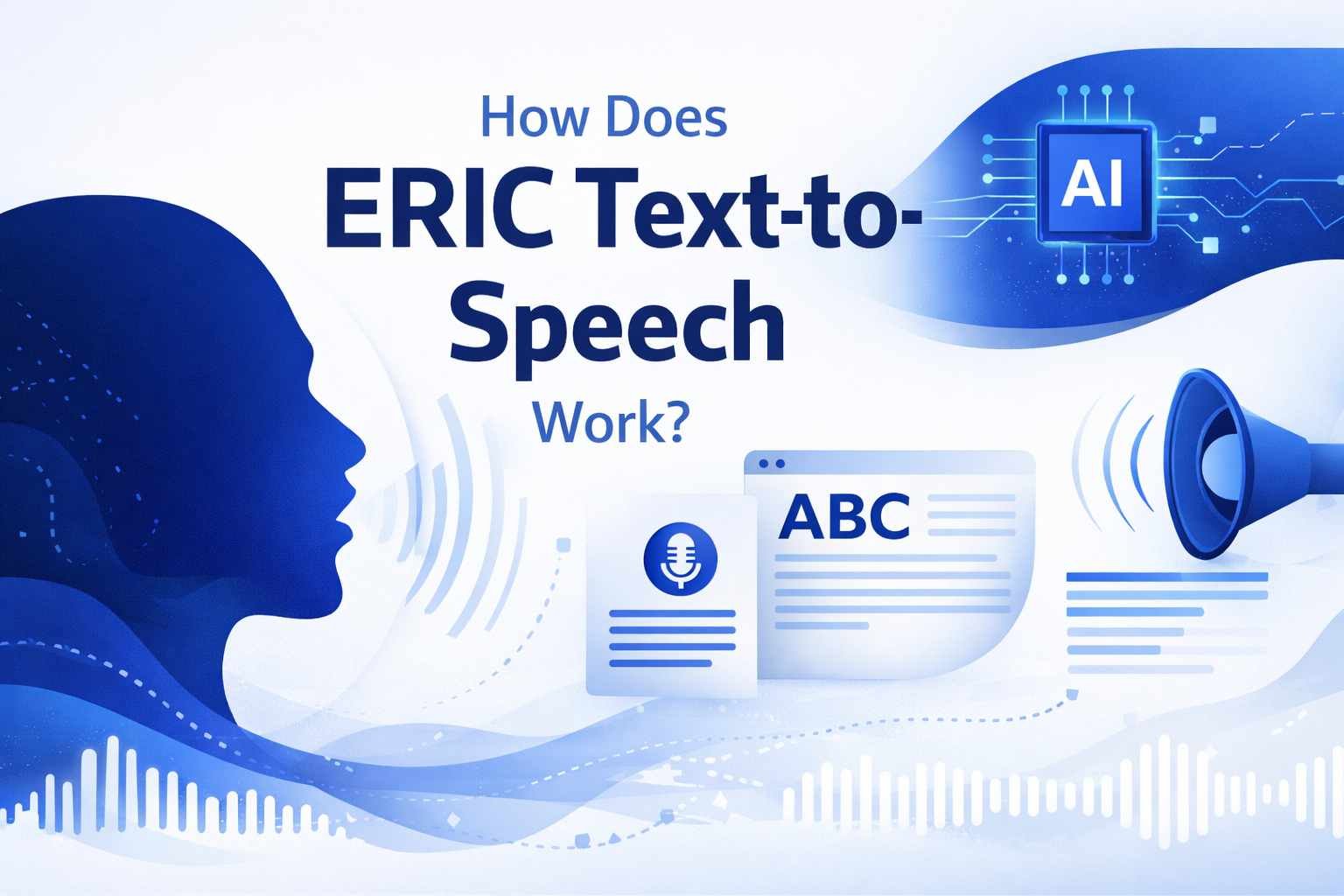
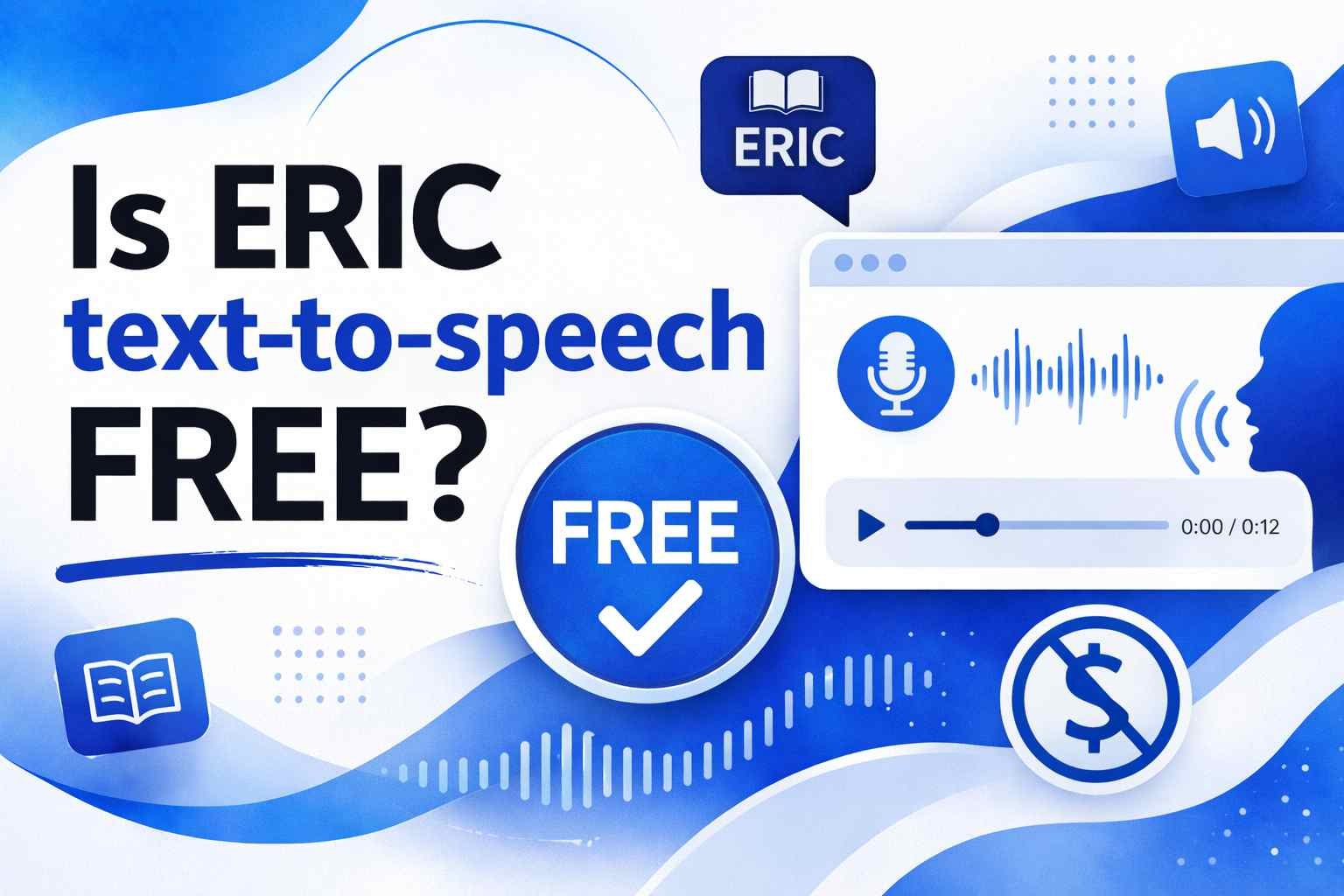
Yes, ERIC text-to-speech can be completely free.
Tools like Toolversal's ERIC Text-to-Speech offer genuinely free access with no credit card required, no trial period that expires, and no sudden paywall after you've gotten hooked.
But here's the thing: not all ERIC TTS implementations are free. Some platforms charge. Some have limitations. Some are "free" in the same way that a drug dealer's first hit is free—it gets you hooked, then suddenly you're paying monthly.
So let's dig into what you're actually getting, where to find it, and how to avoid getting screwed over.
Understanding "Free" in the Text-to-Speech World
The word "free" has been so abused by tech companies that it barely means anything anymore.
Let's break down the different types of "free" you'll encounter when looking for ERIC text-to-speech:
Actually Free (No Bullshit)
This is the genuine article. You go to the website, use the tool, download your audio, and leave. No account creation, no payment information, no "upgrade to premium" popups every three seconds.
Toolversal falls into this category. It's free in the same way a public park is free—it's just there for you to use.
These platforms typically make money through:
- Minimal, non-intrusive ads
- Optional premium features (but the core functionality stays free)
- Other revenue streams that don't depend on locking you out
Free Trial (The Bait-and-Switch)
You get 7-14 days of full access, but you need to enter credit card information. After the trial, you're automatically charged unless you remember to cancel.
This isn't necessarily evil, but it's not really "free" either. It's more like "temporarily free with strings attached."
Freemium (The Limitation Game)
The basic version is free but limited. Maybe you can only generate 5 audio files per day. Or the audio quality is lower. Or there's a watermark. Or the free tier doesn't include the ERIC voice at all.
Again, not inherently bad, but you need to know what you're getting into.
Free with Account (The Data Collection Model)
You don't pay money, but you do "pay" with your data. Email required. Sometimes phone number. Sometimes they want to know your business use case, company size, and your mother's maiden name.
The tool is functionally free, but you're trading privacy and dealing with inevitable marketing emails.
Academic/Non-Commercial Free (The Fine Print Special)
Free if you're a student or using it for non-commercial purposes. The moment you want to use it for business or make money from content that includes the audio, you need to pay.
Always read the terms of service if you plan to monetize your content.
Where ERIC TTS Is Actually Free (Real Platforms, Not Vapor)
Let's talk specifics. Where can you actually access ERIC text-to-speech without paying?
Toolversal (The No-BS Option)
Toolversal's ERIC Text-to-Speech tool is straightforwardly free:
- No account creation required
- No credit card needed
- No trial period that expires
- No artificial limitations designed to frustrate you into upgrading
- Direct MP3 download of your generated audio
You type your text, generate the speech, download the MP3, and you're done. That's it. That's the whole process.
This is part of Toolversal's broader mission: providing genuinely free online tools for developers, designers, and professionals without the predatory subscription models that plague the tech industry.
Open Source Projects (The Technical Route)
If you're comfortable with code, there are open-source TTS projects that include ERIC-like voices. These are completely free but require technical setup:
- Festival Speech Synthesis System
- eSpeak
- MaryTTS
The catch? You need to install software, manage dependencies, and actually know what you're doing. For developers, this is great. For regular users who just need a voiceover for their YouTube video, it's overkill.
Platform-Specific Implementations (The Ecosystem Play)
Some platforms include ERIC or similar voices as part of their broader service:
- Certain video editing software
- Some e-learning platforms
- Accessibility tools built into operating systems
These are "free" if you're already using the platform for other reasons, but they're not really accessible if you're not.
What You Actually Get with Free ERIC TTS
Here's what matters: when something is free, what are you actually getting?
Audio Quality
Free doesn't mean bad anymore. Thanks to advances in neural TTS technology, free implementations like Toolversal's ERIC voice produce audio quality that's:
- Clear and intelligible
- Naturally paced
- Properly intonated
- Suitable for professional use
Ten years ago, free TTS sounded like a robot having an existential crisis. Today, it sounds like a human with good diction.
Output Format
Most free ERIC TTS tools, including Toolversal, provide MP3 downloads. This is the universal format that works with:
- Video editing software (Premiere, Final Cut, DaVinci Resolve, etc.)
- Audio editing tools (Audacity, GarageBand, etc.)
- Podcast platforms
- Social media uploads
- Basically anything that accepts audio
Some premium services offer additional formats (WAV, FLAC, OGG), but for 99% of use cases, MP3 is all you need.
Character/Length Limitations
This is where free versions sometimes differ from paid ones.
Toolversal's free ERIC TTS has reasonable limits designed to prevent abuse while allowing genuine use. You can generate substantial amounts of content without hitting artificial walls.
Compare this to some "free" services that limit you to 100 characters (roughly one sentence) before demanding payment. That's not free; that's a demo.
Commercial Use Rights
This is crucial and often overlooked.
Some "free" TTS tools prohibit commercial use in their terms of service. This means if you use the audio in a YouTube video that's monetized, or in a product you sell, you're technically violating their terms.
Always check the licensing for commercial projects. Toolversal is designed to be accessible for various use cases, but reviewing terms for your specific application is always smart.
Customization Options
Free tiers typically offer less customization than paid versions. You might not be able to:
- Adjust speaking speed as precisely
- Fine-tune pitch and tone
- Add emphasis to specific words
- Control pause lengths
For most users, the default settings work fine. But if you need granular control, you might eventually need premium features.
The Hidden Costs Nobody Talks About
Even when something is technically free, there can be hidden costs. Let's talk about them.
Time Investment
Some "free" platforms make you jump through hoops:
- Create an account
- Verify your email
- Complete a survey about how you'll use the tool
- Watch a tutorial video
- Navigate a confusing interface
Your time has value. A platform that takes 15 minutes to set up before you can generate your first audio file is costing you something, even if no money changes hands.
Toolversal's approach is refreshingly simple: you go to the tool, you use it, you're done. No friction, no time waste.
Privacy Costs
"If you're not paying for the product, you are the product."
Some free TTS platforms collect extensive data:
- Your text inputs (which might include sensitive information)
- Usage patterns
- Email and contact information
- Behavioral data for advertising purposes
Not all data collection is evil—some is necessary for service improvement. But you should know what you're trading.
Attention Costs
Free platforms sometimes fund themselves through advertising. This means:
- Pop-up ads
- Interstitial ads between actions
- Auto-playing video ads
- "Recommended content" that's actually sponsored
Again, not inherently wrong—people need to make money somehow. But it's a cost in the form of your attention and patience.
Opportunity Costs
If you choose a limited free tool when a better free alternative exists, you're losing potential quality and efficiency.
This is why doing research (like you're doing right now by reading this article) matters. Choosing the right free tool saves you from frustration later.
When You Might Actually Want to Pay for TTS
I know this article is about free options, but let's be honest about when paid tools make sense.
High-Volume Professional Use
If you're generating hours of audio daily for a business, professional TTS services offer:
- Higher character limits or unlimited generation
- Priority processing
- Better customer support
- Advanced customization
- Multiple voice options beyond ERIC
- API access for integration
For businesses, the time saved and features gained often justify the cost.
Specific Advanced Features
Some use cases require capabilities that free tools don't offer:
- Voice cloning (creating a TTS voice that sounds like a specific person)
- Extreme customization of every aspect of speech
- Multiple languages with seamless switching
- Real-time generation with zero latency
- White-label solutions without any branding
If your project requires these, budget for paid tools.
Legal/Medical/High-Stakes Content
When accuracy and liability matter, premium tools often provide:
- Better pronunciation of technical terms
- Terms of service that clearly address liability
- Customer support if something goes wrong
- Quality guarantees
For projects where mistakes have consequences, the safety net of paid services can be worth it.
When Free Tools Don't Meet Your Needs
Sometimes you'll try free options and find they genuinely don't work for your use case. That's fine. At least you explored the free options first before spending money.
But honestly, for most people reading this, Toolversal's free ERIC TTS will do exactly what you need.
How to Maximize Free ERIC Text-to-Speech
If you're using free tools, here's how to get the most out of them:
Write Better Input Text
Garbage in, garbage out. Help the TTS system by:
- Using proper punctuation for natural pacing
- Breaking long paragraphs into shorter sentences
- Writing in a conversational tone rather than overly formal language
- Spelling out numbers and abbreviations ("twenty-three" not "23")
Better input = better output, regardless of whether you're using free or paid tools.
Generate in Sections
If you're creating longer content, generate it in logical sections rather than one massive block. This:
- Avoids hitting character limits
- Makes editing easier
- Reduces the pain if you need to regenerate part of it
- Gives you more control over pacing
Use Audio Editing Software for Final Polish
Generate your speech with Toolversal's ERIC TTS, then use free audio editing software like Audacity to:
- Trim silence at the beginning and end
- Normalize volume levels
- Add fade-ins and fade-outs
- Combine multiple sections seamlessly
This workflow gives you professional results without spending a dime.
Keep Your Text Natural
TTS works best with text that sounds like natural speech. Instead of:
"It is recommended that users engage with the aforementioned functionality."
Try:
"We recommend users try this feature."
Simpler language = more natural-sounding output.
Test Different Punctuation
Experiment with how punctuation affects delivery:
- Commas create brief pauses
- Periods create longer pauses
- Question marks change intonation
- Exclamation points add emphasis (use sparingly)
A few punctuation tweaks can dramatically improve how natural your audio sounds.
The Future of Free Text-to-Speech
Here's where things get interesting.
Why Free TTS Will Keep Improving
The technology behind TTS is becoming commoditized. What cost millions to develop five years ago can now be implemented for thousands. What cost thousands can now be done for hundreds.
This trend will continue. Better quality will become available at lower costs, including free tiers.
Platforms like Toolversal benefit from this trend and pass the savings on to users in the form of free access.
The Open Source Movement
More TTS technology is going open source, which means:
- No licensing fees for platforms that implement it
- Collaborative improvement from global developers
- Reduced barriers to entry
- More free tools for end users
This is good news for anyone looking for free options.
Competition Driving Accessibility
As more platforms offer TTS, competition drives prices down and free tiers up. Companies realize that:
- Free users often become paid users for advanced features
- Free tools build brand loyalty
- Restricting access too much drives users to competitors
This competitive pressure keeps genuinely free options available.
Common Questions About Free ERIC TTS
"Is the quality really as good as paid options?"
For basic to intermediate needs, yes. The core technology is often the same. Paid versions typically offer more customization, not fundamentally better audio quality.
"Will it stay free or is this temporary?"
While I can't predict the future, platforms like Toolversal that build their brand on free accessibility have strong incentives to keep core features free. Their model isn't bait-and-switch; it's genuine accessibility.
"Are there daily limits?"
Most free tools have some limits to prevent abuse, but they're usually generous enough for legitimate use. Toolversal's limits are designed to accommodate real projects, not just demos.
"Can I use it for commercial projects?"
Generally yes, but always verify the specific terms of service for the tool you're using. Commercial use policies vary.
"What's the catch?"
For truly free tools like Toolversal's ERIC TTS, there isn't a catch in the traditional sense. The platform might have ads or offer premium features, but the core functionality remains accessible without tricks or traps.
"How does it make money if it's free?"
Toolversal offers a suite of free tools for professionals. Some users voluntarily upgrade for advanced features, some revenue comes from ads, and the platform builds brand value through trust and accessibility.
Why Toolversal's Approach Actually Works
Let's talk about why Toolversal's ERIC Text-to-Speech represents a better model than the typical tech company approach.
No Artificial Scarcity
Traditional SaaS companies create artificial limitations to force upgrades:
- "You can only convert 100 characters per day!"
- "Download limit: 3 files per month!"
- "Upgrade to access the ERIC voice!"
These limitations aren't technical—they're business strategy. The tool could easily offer more, but they deliberately restrict it to create urgency to upgrade.
Toolversal doesn't play that game. The limits are reasonable and designed to prevent abuse, not to frustrate users into paying.
Respecting User Time
There's no labyrinth of account creation, verification emails, or "onboarding" processes. You have text, you need speech, you generate it. Done.
This respect for user time is rare in the tech industry, where every platform wants to "capture" you in their ecosystem.
No Dark Patterns
Dark patterns are design choices that trick users into doing things they don't want to do:
- Pre-checked boxes for newsletters
- Confusing cancellation processes
- "Confirm" buttons that actually start trials
- Making the free option hard to find
Ethical platforms avoid this manipulative design. When you use Toolversal's ERIC TTS, what you see is what you get.
Building Trust Through Transparency
When companies are upfront about what's free and what isn't, about what data they collect and why, about what limitations exist and the reasons for them, they build trust.
Trust is worth more than the short-term revenue from tricking users into subscriptions.
Real-World Use Cases for Free ERIC TTS
Let's get practical. What are people actually using free ERIC text-to-speech for?
YouTube Content Creators
Voiceovers for:
- Explainer videos
- Educational content
- Documentary-style videos
- Tutorials and how-tos
Using Toolversal's free ERIC voice saves hundreds or thousands of dollars compared to hiring voice actors, especially for creators just starting out.
Podcasters
While interview podcasts need human voices, some formats work well with TTS:
- News roundups
- Educational content
- Scripted narrative shows
Free TTS makes podcasting more accessible to people who are camera-shy or have speech impediments.
Educators and Course Creators
E-learning content often requires hours of narration. Free ERIC TTS enables:
- Consistent voice across all modules
- Easy updates when content changes
- Scalable content creation
- Multilingual versions (with appropriate TTS voices)
App Developers
Adding voice feedback to applications:
- Navigation instructions
- Error messages
- Tutorial guidance
- Accessibility features
Free TTS means even bootstrapped startups can include voice features.
Social Media Marketers
Quick voiceovers for:
- Instagram Reels
- TikTok videos
- Facebook ads
- LinkedIn video content
Fast, free, and professional enough for social media platforms.
Accessibility Advocates
Creating accessible versions of written content for people with visual impairments or reading difficulties. This is perhaps the most important use case—making information accessible to everyone.
The Honest Truth About "Free"
Look, I'm not going to pretend that free tools are perfect or that paid tools never offer value.
The truth is more nuanced:
Free ERIC TTS is legitimately good enough for most people most of the time.
If you're a content creator, educator, developer, or professional who needs text-to-speech occasionally or even regularly, free tools like Toolversal's ERIC TTS will serve you well.
But specialized needs might require specialized (paid) solutions.
If you're running a call center, building a commercial AI assistant, or creating high-budget productions, you might eventually need features that only paid services provide.
The smart approach: Start free, upgrade only if necessary.
Don't pay for features you don't need. Use free tools until you hit a genuine limitation, then evaluate whether upgrading makes sense.
Most people never hit those limitations.
The Bottom Line: Yes, It's Actually Free
So to answer the question directly: Yes, ERIC text-to-speech is free when you use platforms like Toolversal.
Not "free for 7 days then $29/month."
Not "free but with a watermark and limited to 50 characters."
Not "free if you sell us your firstborn child."
Actually free. As in, you don't pay money and you get a functional, useful tool.
Is this true everywhere? No. Some platforms charge for ERIC TTS. Some have restrictive free tiers that are barely usable.
But the legitimately free options exist, they work well, and they're accessible to anyone with an internet connection.
The reason I keep pointing to Toolversal's ERIC Text-to-Speech tool isn't because I'm getting paid to shill for them (I'm not). It's because when researching this article, it represented exactly what people are actually looking for: a tool that works, doesn't have bullshit limitations, and doesn't try to trick you into paying.
That's increasingly rare in the tech world, and it's worth highlighting when you find it.
What You Should Do Next
Stop reading and actually try it.
Seriously. You've read 2500 words about whether ERIC text-to-speech is free. You know the answer. Now go use it.
Head to Toolversal's ERIC TTS tool, type something—anything—and generate speech. It takes 30 seconds.
Then you'll have firsthand experience instead of just theoretical knowledge.
Maybe it works perfectly for your needs and you never need to look at paid options.
Maybe you discover limitations that require you to explore other solutions.
Either way, you'll know—and knowing is better than wondering.
The best part about genuinely free tools is there's zero risk in trying them. No credit card to forget to cancel. No trial period countdown. No buyer's remorse.
Just a tool that might solve a problem you have.
And if it does, great. Use it. Create something. Make your content more accessible. Build something cool.
And if it doesn't, you've lost nothing but a few minutes.
That's what "free" should mean—and that's what it actually means with tools like Toolversal's ERIC Text-to-Speech.